Robotics
 The Robot ReportJuly 28, 20265 min read2 views
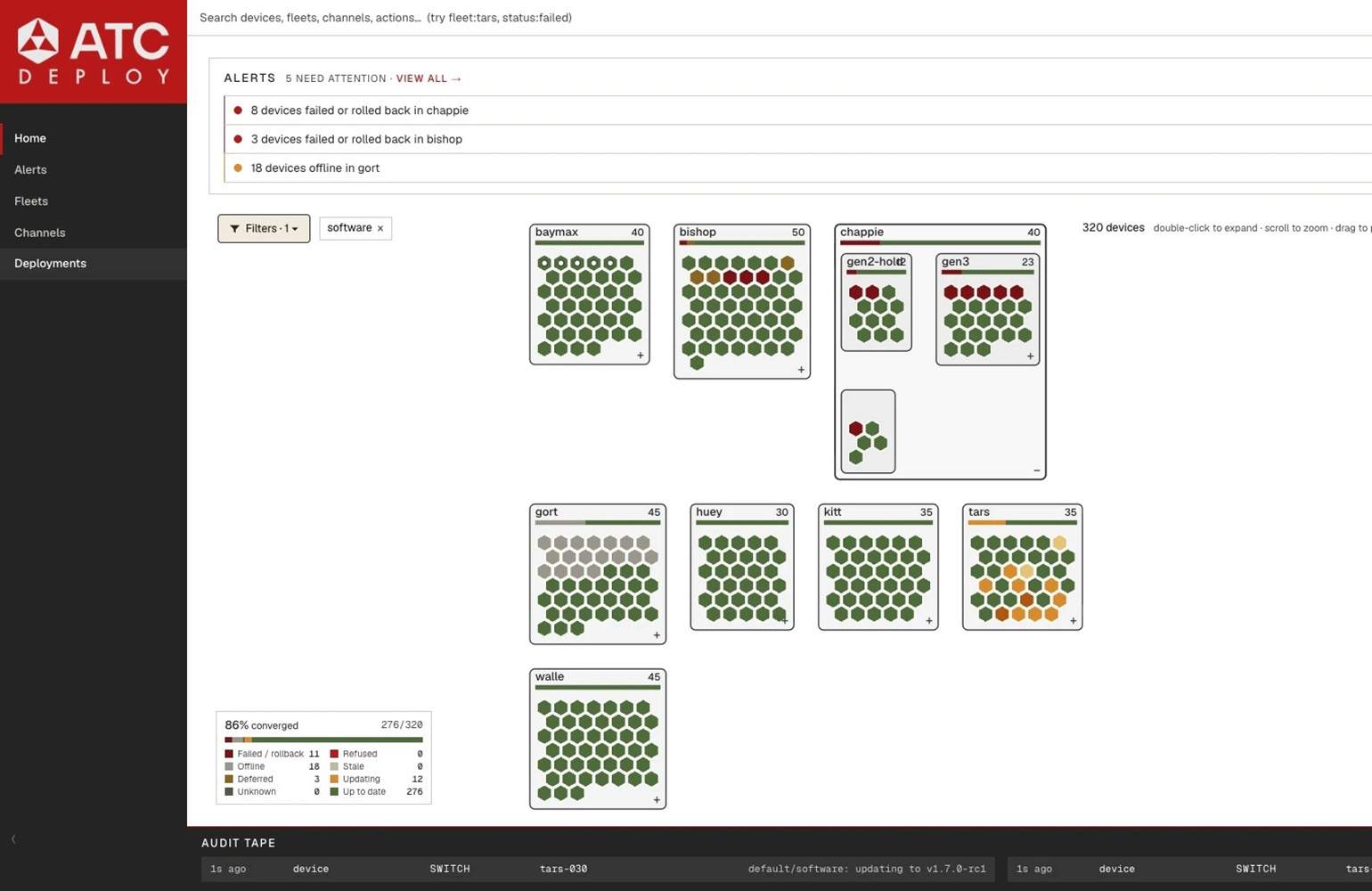
ATC Deploy ships software to robots wherever they are. | Source: Agency Tool Company Jack Morrison and Davis Foster, co-founders of Scythe Robotics, today launched Agency Tool Co. The new startup seeks to build fast, reliable infrastructure for robotics developers.
Since leaving Scythe around a year ago, Morrison said he and Foster stayed busy getting a feel for how the robotics landscape has changed. “I wanted to see what’s out there and get my hands dirty building again,” Morrison told The Robot Report . Morrison said he found that, during his eight years at Scythe, many companies were struggling with the same problems that Scythe struggled with.
It reminded him of the years he had spent wishing there was a vendor out there that understood the unique challenges that come with robotics and could then actually meet those needs. “It’s all the same problems,” he said. ” The robotics industry has matured in the past few years.
The AI boom brought a host of new companies and funding into the industry. Meanwhile, more established robotics companies are ready to scale. ’s first offering, ATC Deploy, according to Morrison.
“Today, we hear a lot in robotics about this kind of zeitgeist around deploying robots and getting robots in the field,” he said. ” OTA updates are still a hurdle for the robotics industry ATC Deploy us designed to work with any kind of deployment strategy or application architecture. | Source: Agency Tool Company ATC Deploy ships software to robots wherever they are today.
The system works with the software and architecture customers are already using, said Agency Tool Co. Customers can continue using their own operating system image, docker Open Container Initiative (OCI) images, and any file or directory tree. Morrison said the team started with robot software deployment because he saw it as a real bottleneck for the industry.
However, many people outside of the industry assumed that it was a solved problem. “Installing software is something that everyone does. People do that 10 times a week.
You put a new app on your iPhone. You download something on Windows, or you update Chrome,” Morrison said. ” Morrison said he knows firsthand from his days at Scythe how many things can go wrong when trying to push new software onto an existing system.
“Today, you’ve got to manage a whole host of scripts to copy the software onto the machine to change which version is running, to manage restarting the software when you do ship a new version, to validate that it didn’t get corrupted when it was transferring, and that’s just with one robot sitting in front of you,” he said. ” Agency Tool Co. hopes to help with flaky connections ATC Deploy allows users to push updates to robots anywhere, whether the robots are underwater or right in front of them.
| Source: Agency Tool Company Robots deployed beyond warehouses and factories may not always have access to a clear Wi-Fi connection, noted Agency Tool Co. “Many of them might be on a straw-like LTE connection or 3G connection,” Morrison said. ” A flaky connection means resource availability on that device could be limited, or even entirely unreachable at certain parts of the day.
“Robots also turn off at random times that you can’t control,” said Morrison. ’s plans. “It allows us to provide value to our customers, help get more robots in the field, and then build this platform and this system of record of what the robots are and what they’re doing,” Morrison said.
” The system can also help those who are working on their very first robots. “We’re solving the pro blem not only for those folks who have scaled fleets already out in the field,” Morrison said. ’s launch partners are all building robots for different industries.
Burro has hundreds of robots working in agriculture and other outdoor environments. Gather AI operates warehouse inventory drones. Meanwhile, Tempo is starting to deploy grinding machines at customer sites.
“It’s been interesting to see how they work and see their developer workflows,” Morrison said. ” Most companies go through a similar progression through a lab phase, then a phase of bringing the robot into the field, and then scaling. “The three partners we’re working with are really at three different phases in that journey,” Morrison said.
Tempo is in the early stages, mostly working in its office and with a handful of robots in the field. On the other end of the spectrum is Burro, which has more than 750 robots out in the field. Despite these differences, Morrison said they care about the same things: They want to know how to minimize bandwidth or how to adopt new software without having to change the architecture of the entire system.
Agency Tool Co. targets validation ATC Deploy is the first building block in the company’s plans for its platform. | Source: Agency Tool Company Morrison said the next bottleneck the company wants to address is validation.
It has plans to eventually roll out ATC Build, which will give teams the ability to build and test systems with a one-line change. “We’re already looking at basically giving developers cloud-type access to embedded compute that they would use in their robots that today, they have to build and host themselves. We’re primarily focused on making that available for continuous integration,” Morrison said.
” Morrison said he expects to continue taking on early customers for ATC Deploy, with a full rollout coming in the next few months. From there, ATC Build will build on top of the company’s work on ATC Deploy. “There’s a lot of diversity in how folks want to work, but we’re building these core building blocks that they can put together with their own special sauce sprinkled on top,” Morrison said.
” Save the date for RoboBusiness 2026 The post Agency Tool Company wants to make OTA software updates easier appeared first on The Robot Report .
The Robot Report
therobotreport.com