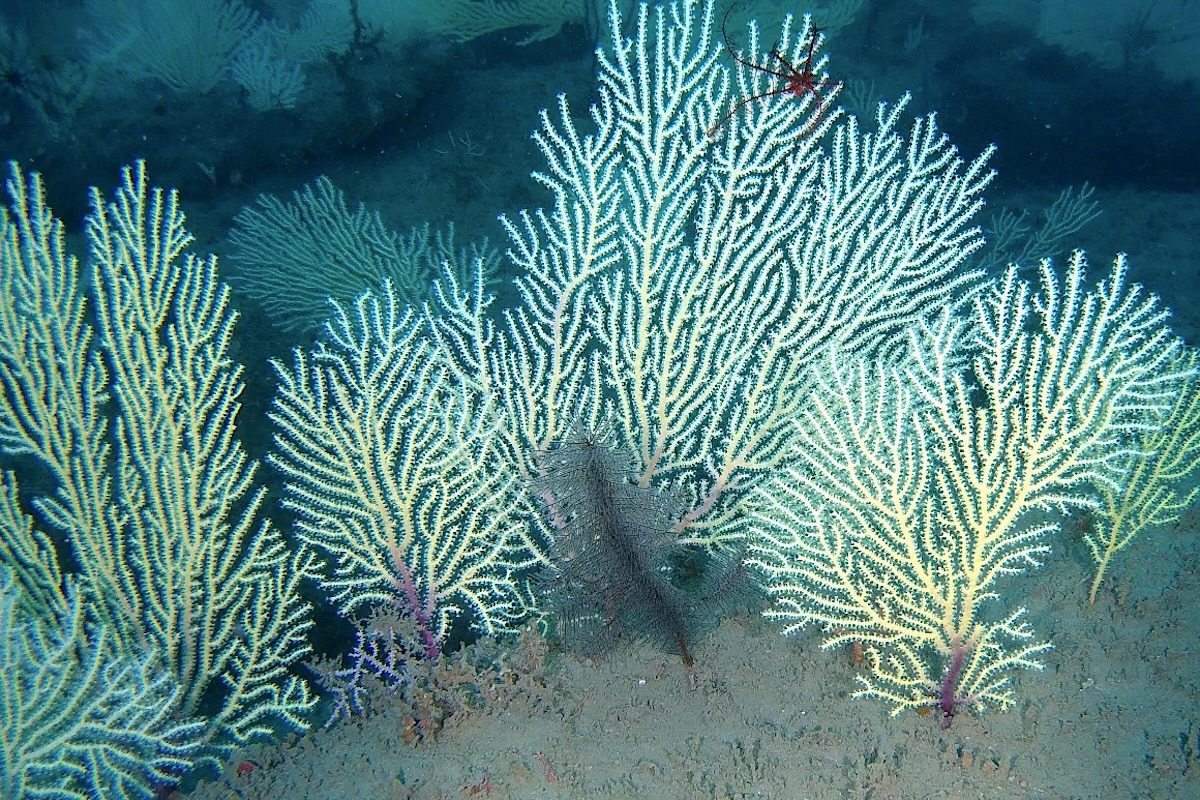
Long presumed dead, a thriving coral reef is discovered in West Africa
 Hacker NewsJuly 21, 20265 min read
This article was originally published by Inside Climate News and is reproduced here as part of the Climate Desk collaboration.
Soft corals discovered off the coast of Benin. Gérard Zinzindohoué / IRHOB
Sixty years after surveyors first uncovered evidence of a sprawling coral reef off the West African nation of Benin, scientists have at last found the reef.
In the 1960s, fishing surveyors off West Africa’s Benin coast hauled up heads of coral in their nets. Employed by local governments to assess fish diversity and discover potentially trawlable seabeds in the sandy-bottomed Gulf of Guinea, the researchers shrugged off the discovery at the time, burying the find in a brief paragraph in a 130-something-page report.
With no surveys since, the scientists who followed had lost track of exactly where the reefs might lie. And as mass bleaching events and overfishing slashed the world’s coral reef area by more than 50 percent since the 1950s, local oceanographers had written off any remnants of a possible reef as dead.
More than six decades on, the mystery has been solved as a team of Beninese scientists rediscovered the healthy reef teeming with marine life. At least eight coral types and eight fish species have formed a thriving ecosystem on this long-forgotten site.
“I was guided by hope. A hope that sometimes there are species or ecosystems which kind of defeat time, or are trying to resist it,” said Gérard Zinzindohoué, the project lead for Coral Reefs Rediscovering & Exploration in Benin.
Fresh off seeing coral for the first time in Cape Verde in 2021, Zinzindohoué asked himself a simple question: Do we have any reefs in Benin?
After a colleague passed on the original 1960s report — which mapped out a potential 24-mile-long coral reef barrier along Benin’s coastline — Zinzindohoué recognized a gap in the scientific knowledge: “I realized how little we know about our own coastal environment.”
But in the years that followed, a string of failed grant applications halted progress on solving the mystery.
When he secured a $20,000 National Geographic Explorers grant in January 2025, the project finally ignited. Yet getting the gear was also challenging. The sonar equipment swallowed up almost 80 percent of the grant budget and nearly stalled entirely when the European supplier refused to accept payment from Zinzindohoué’s African bank account.
Hacker News
news.ycombinator.com