Virexa
HomeAIProgrammingCloudSecurityOpen SourceGamesMobile GamesDeveloper Hub
Sign InSign Up
Virexa
Sign InSign Up
AIProgrammingCloudSecurityOpen SourceGamesMobile GamesDeveloper Hub
Virexa

Modern AI news aggregation and newsletter platform covering technology, business, AI, games and world news.

Categories

  • AI
  • Programming
  • Cloud
  • Security
  • Open Source
  • Developer Hub

Company

  • About
  • Contact
  • Advertise

Resources

  • RSS Feed
  • API
  • Privacy Policy
  • Terms of Service

© 2026 Virexa. All rights reserved.

Virexa
HomeAIProgrammingCloudSecurityOpen SourceGamesMobile GamesDeveloper Hub
Sign InSign Up
Virexa
Sign InSign Up
AIProgrammingCloudSecurityOpen SourceGamesMobile GamesDeveloper Hub
Home›News Explorer

Explore

News Explorer

Browse every article collected by VIREXA. Newest articles appear first.

Filters

123 results • Page 3 of 11

Hello Developer: April 2026
ProgrammingNews

Hello Developer: April 2026

In this edition: Join us on bilibili and LinkedIn. Catch up on essential sessions before WWDC26. Build a travel app with sample code. Browse the latest edition of our new design gallery. Learn about the biggest-ever update to Analytics in App Store Connect. Read now

Apple Developer News·April 7, 2026·1 min read
How Infold Games fashioned an open world for Infinity Nikki
GamesTutorial

How Infold Games fashioned an open world for Infinity Nikki

Infinity Nikki is a literally glowing example of what video game graphics can be. The fifth in a series of dress-up titles from Infold Games, Infinity Nikki is also the first to embrace elements of RPG action-adventure. But instead of tracking down weapons and battling bad guys, this installment finds its wide-eyed heroine solving puzzles by collecting enchanted outfits found throughout a series of wondrous lands. Infinity Nikki Available on: iPhone, iPad Based in: Shanghai Awards: Apple Design Award winner for Visuals and Graphics (2025), App Store Awards Game of the Year finalist (2025), App Store Editors’ Choice Download Infinity Nikki from the App Store > The fashion-forward gameplay still remains, of course. Nikki’s dress sways and waves every step of the way, while capes sparkle and drift in the wind. Different outfits are imbued with different abilities that allow players to guide Nikki — and her cat companion, Momo — through clever puzzles. And from quaint cobblestone towns to distant mountains, every corner of the game’s Miraland — brought to life with cutting-edge visuals — is awash in beautifully realized lighting and effects from advanced shading techniques like Global Illumination. (Executive producer Kentaro Tominaga previously worked on several installments of the Legend of Zelda series.) It’s a wonderland of texture, light, and animation — and the 2025 Apple Design Award winner for Visuals and Graphics. To find out more, we caught up with Douhu, Infinity Nikki’s lead gameplay systems designer for outfits; Ade, lead programmer; and Dodie, art director. Why did you decide to make this fifth installment an open-world RPG? Douhu: When we started thinking about this six years ago, we already knew it would be an open-world game. So we asked ourselves: How do we go about bringing Nikki into that space? And how do we set it apart from other open-world games on the market? To make these worlds as immersive as we can, we keep an eye on all the details, all the time. Douhu, lead gameplay systems designer for outfits This is the first Nikki game to include action-adventure elements and light combat. Douhu: Yes, but we knew that combat wouldn’t be part of the game’s core play. The Nikki series has such a defined style. We thought a lot about how to maintain that. How many people worked on the visuals for this? Douhu: Oh, it’s a huge team — roughly 800 people. It’s a fun but a complicated job. We have a lot of visual pipelines all going at once: cutscenes, the NPC ecosystem, lighting, performance. The production complexity is so high. The payoff for that work seems to be everywhere: The game is full of fabrics, sparkles, environments, and natural elements. Douhu: And we think about all of them. For instance, when Nikki runs up a flight of steps in a cutscene, we don’t want her to stamp her feet down. We want her to move lightly and elegantly. All the sounds you hear are based on real-world sounds, though we’ve added some imagination to them in post-production editing. To make these worlds as immersive as we can, we keep an eye on all the details, all the time. Nikki’s double-jump is especially elegant; it’s almost like a glider coming in for the softest of landings. Douhu: That’s because we want players to have plenty of time to experience the world. Our core gameplay is based on jumping, but it’s not a very quick motion. It’s slow, like a micro-response for that specific floating motion. And that’s because we want to let players breathe and appreciate all the details of Miraland. What is Day 1 like on the visuals for something like this? Douhu: Because this is our fifth game with Nikki, we already have the character and philosophy built out, so those first days are more about sketching out the new world and its different maps. Ade: To start, we reconstruct the structure and physical performance of the fabrics in the engine, based mostly on reality. Then we’ll do extreme evolutions on the fabrics. We have so many fabric categories in our library, and a lot of those are heritage from previous titles. But we make all kinds of adjustments, and add all kinds of effects to make the game feel like it’s beyond reality. Douhu: We do have a big closet in our office! But we want to emphasize that we’re not just exporting real fabrics or trying to recreate reality. We’re adding layers of fantasy. We add complicated embroideries, more patterns, and glittering special effects to depict a more whimsical, fantastic version of reality. That’s why Nikki’s outfits look more gorgeous than they would in real life. Hopefully! Could you select an element in the game and share a little about how it was brought to life? Dodie: Color has always been central to our art creation, so I’ll share two examples from Version 2.0: the five-star outfit Behind Prayers and the location called Snail Ranch. The core design concept of Behind Prayers is ”a confined divine maiden,” so that meant a maximal design approach. The divine maiden longs for freedom, yet she’s draped in heavy layers of ornate garments and gemstones. These represent both sacred glory and the weight of restraint: dazzling and radiant, yet undeniably burdensome. We chose gold as the primary color to express sanctity and brilliance, and we introduced touches of green to break potential visual monotony. We further embellished the outfit with a rich array of multicolored gemstones and enhanced it with prismatic sparkle effects, allowing it to shimmer vividly — even at night. Snail Ranch, meanwhile, is the player’s first destination in Itzaland — the place where Nikki first encounters the Shroomlings and the snails. The lighting in this area is intentionally bright and inviting. Sunlight filters through enormous leaves, creating a warm and relaxing atmosphere, while even small puddles along the path reflect the deep blue of the sky. The scene takes on a fairytale quality, inviting players to believe and lose themselves in the land. Talk about your approach to creating these fabrics and outfits. Ade: Infinity Nikki introduces a revolutionary material system. At the core is a re-engineered fabric algorithm that preserves the advantages of four-layer UV blending textures, while requiring only minimal parameter adjustments to accurately simulate a wide range of materials, including the natural coarseness of cotton and linen, the smooth sheen of silk and satin, as well as the delicate tactile qualities of various velvets and flannel. The system also provides deep support for custom reflections and diverse sparkle responses, making it easy to create distinctive highlights and dreamy glints, such as the unique interplay of gauze and silk in the Fairytale Swan outfit. Visual richness in Infinity Nikki extends well beyond fabric. We developed a specialized jewelry material system using advanced algorithms to simulate the brilliance of gemstones, including complex refraction, 3S light transmission, and highly variable specular highlights, as seen in the pearls and diamonds of the Fairytale Swan outfit. Dynamic presentation has also broken through previous limitations. To support animated patterns in high-end outfits such as Threads of Reunion, the team developed an innovative solution to mitigate Unreal Engine 5’s interference from engine-native motion blur on UV animations. This enables crisp and vivid celestial motion effects: three independent orbits allow full customization of planetary shapes, angular velocities, and trajectories, layered with flowing asteroid belts and lunar phase changes. And how do you approach physical simulation? Ade: We make flexible use of skeletal physics and Chaos Cloth to achieve natural, expressive motion. Through proprietary skeletal chain algorithms and enhanced cloth solvers, the team replaces costly and unstable traditional collision-based algorithms with more stable and controllable constraint-based algorithms. Let’s take Nikki running in a loose dress as an example. We introduced a flexible and soft-driven constraint stage during preprocessing, ensuring that even under dramatic movements, the initial garment avoids clipping the body. While pursuing physical realism, the system also preserves the intended artistic silhouette of garments, particularly structured garments with petticoat. These outfits must flow naturally like fabric, while maintaining behavior consistent with their physical construction. Our custom algorithms incorporate collision handling between different garment types and multiple clothing layers, enabling free outfit combinations without sacrificing stability. By carefully balancing visual effects and performance, we achieve consistent results across multiple platforms. Keep reading Developer stories explore best practices and philosophies from some of the most inventive developers in the Apple community. In each story, we go behind the screens with developers, designers, and engineers to find out how they brought their remarkable creations to life. Browse all developer stories >


Q&A: How Plane Finder set itself up for the long haul
Mobile GamesNews

Q&A: How Plane Finder set itself up for the long haul

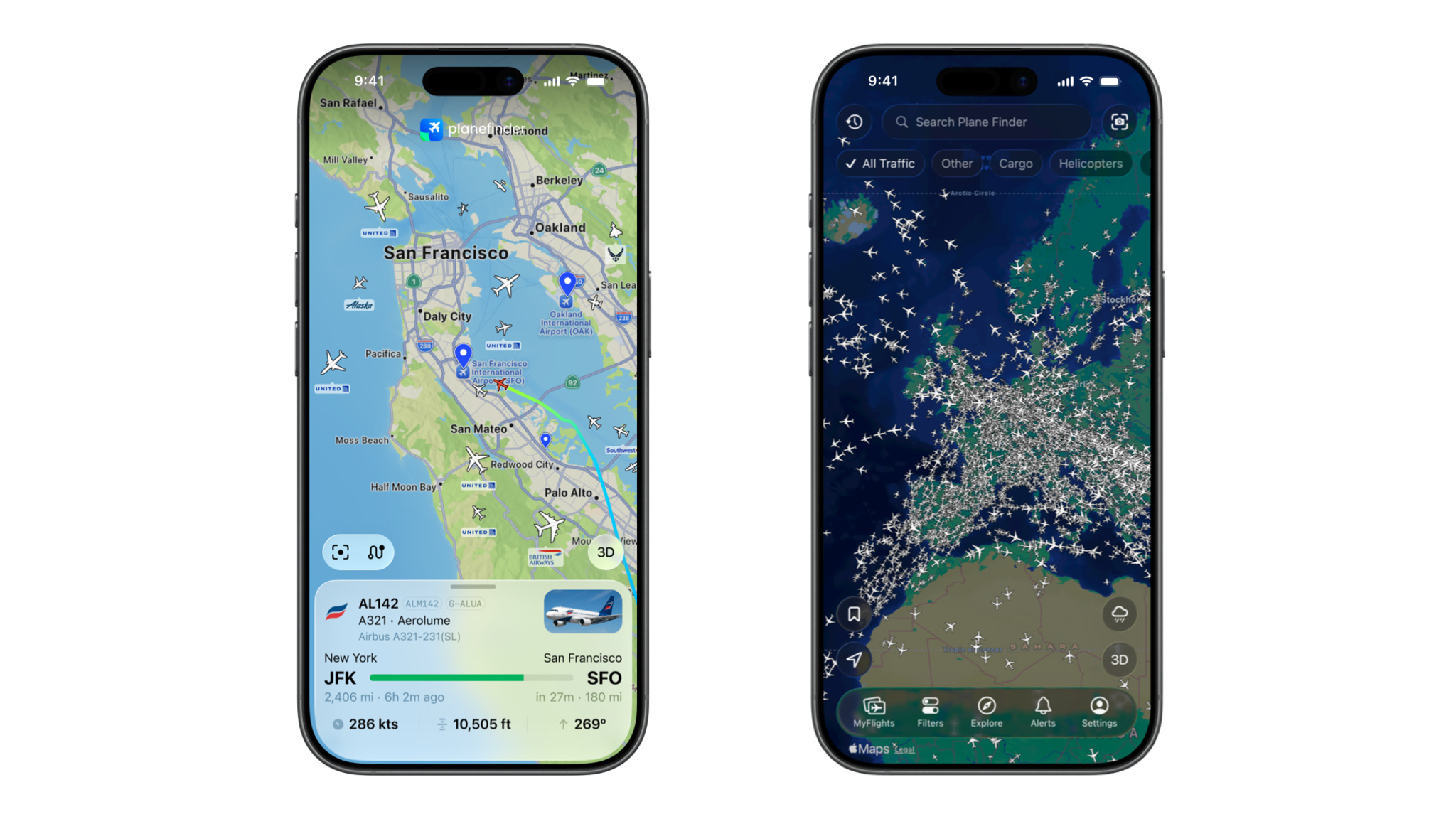
Plane Finder is a sparkling example of what happens when a small team grows with a platform. Launched in 2009, Plane Finder didn’t scale over the years by adding headcount, vendors, or complexity. Instead, founders Jodie and Lee Armstrong made a long-term bet on Apple’s ecosystem — staying native, sticking close to first-party tools, and reading platform signals early. And over time, an app that began as “planes on a map” evolved into a full end-to-end flight-tracking business — one that includes a global network of physical hardware — built and operated by a team of just eight people. We talked to the married founders about their early days, the new design and Liquid Glass, and the challenges of running a global flight tracking network. Plane Finder Available on: iPhone, iPad, Apple Watch Team size: 8 Based in: UK Download Plane Finder from the App Store > Take us back to 2009. What sparked the idea for Plane Finder , and what were those early days like? Lee: We’ve been on the App Store since about a year after it opened. It feels like a lifetime. But the real spark was seeing the unveiling of the iPhone itself in 2007. We were actually in the United States when it came out, so we picked one up, not really knowing what we’d do with it. There was no App Store yet, and I couldn’t even use it as a phone in the UK. It was literally just to hold and swipe back and forth. But that moment became such a huge part of our journey. We still have that iPhone on display. In those early days, did you have aspirations of becoming an end-to-end flight tracking platform? Jodie: Not at all. We started with just the app. Today, we collect our own positional information directly from aircraft, put it inside apps, and sell our data commercially. You’re a small team of eight people. What’s that like? Lee: I don’t think we could have done it without Apple technologies. We’re a small team, and we wouldn’t have the platform or methods to market on a global scale without the App Store — credit cards, StoreKit, localization. We really value the App Store as a platform. Plane Finder is known for adopting Apple technologies and features — like ARKit, MapKit, and Liquid Glass — early. Which tools have made the biggest difference? Lee: It all goes back to MapKit. We flippantly say the app is “planes on a map,” and MapKit is core to that. We’re also big users of Metal for our 3D globe view. And we just wouldn’t be able to handle subscriptions and monetization with promotional offers without StoreKit 2. We don’t use any third parties or cross-platform frameworks. We’re all in on Apple technologies because they provide everything we need. What made you willing to be such early adopters? Jodie: I steer the company from the mindset of a quote I heard years ago: “When new technologies come along, you can either be part of the steamroller or part of the road.” We always want to be part of the steamroller. We’re quick to evaluate new technology, and if we can lean into it in a way that makes sense for our products, we go for it. Can you talk about the process of adopting Liquid Glass? Jodie: We were on board with the concept straight away. From a leadership perspective, we said, “This is the future. We’ve got to make it make sense for what we do.” The design and engineering teams worked incredibly hard bringing those two things together — staying current and leaning into the tech while making it make sense for our world. What does the developer community mean to you? Lee: It’s the reinforcement piece. When you’re working in silos, the community gives you confidence that you’re applying technologies correctly. It’s all well and good seeing WWDC sessions with slides and sample code, but that’s very specific. Seeing how it works in the real world is invaluable. Jodie: Everyone I speak to within Apple has passion and opinions about our app. They’re very engaged, and every piece of feedback is valuable. We’ve been asked questions over the years like “Why do you do this with your toolbar?” All that conversation is helpful. Plane Finder isn’t just an app. You’ve deployed thousands of flight tracking devices worldwide. How has Apple’s ecosystem enabled that? Jodie: There’s a symbiotic relationship between people enjoying the app and wanting to get involved by hosting receivers where we need coverage. Lee: When we first started, we had one receiver covering the south of the UK. People downloaded the app and said, “This is great, but I live in Scotland and can’t see any planes.” So we’d send them a receiver. Before long, we heard that from Sweden, the United States, Africa, and Asia. Jodie: Today, we use the app to find people in locations where we want to improve coverage. We’re leveraging the power of the audience to grow the network even further. What’s next? Jodie: We haven’t finished our Liquid Glass journey. We’re working on an internal project code-named “Plane Finder Double Glazed” — the next iteration with wider UI changes that we held back initially. We’re also looking at how we can leverage machine learning and foundation models. What’s one thing people don’t realize about running a global flight tracking network? Lee: We own and operate the network of receivers that power it. A lot of people think we buy that data like other companies do. Jodie: We’ve designed and manufactured receivers and antennas. There’s more to us than just being an app! Keep reading Developer stories explore best practices and philosophies from some of the most inventive developers in the Apple community. In each story, we go behind the screens with developers, designers, and engineers to find out how they brought their remarkable creations to life. Browse all developer stories >
App Store expands support to 11 new languages
Mobile GamesTutorial

App Store expands support to 11 new languages

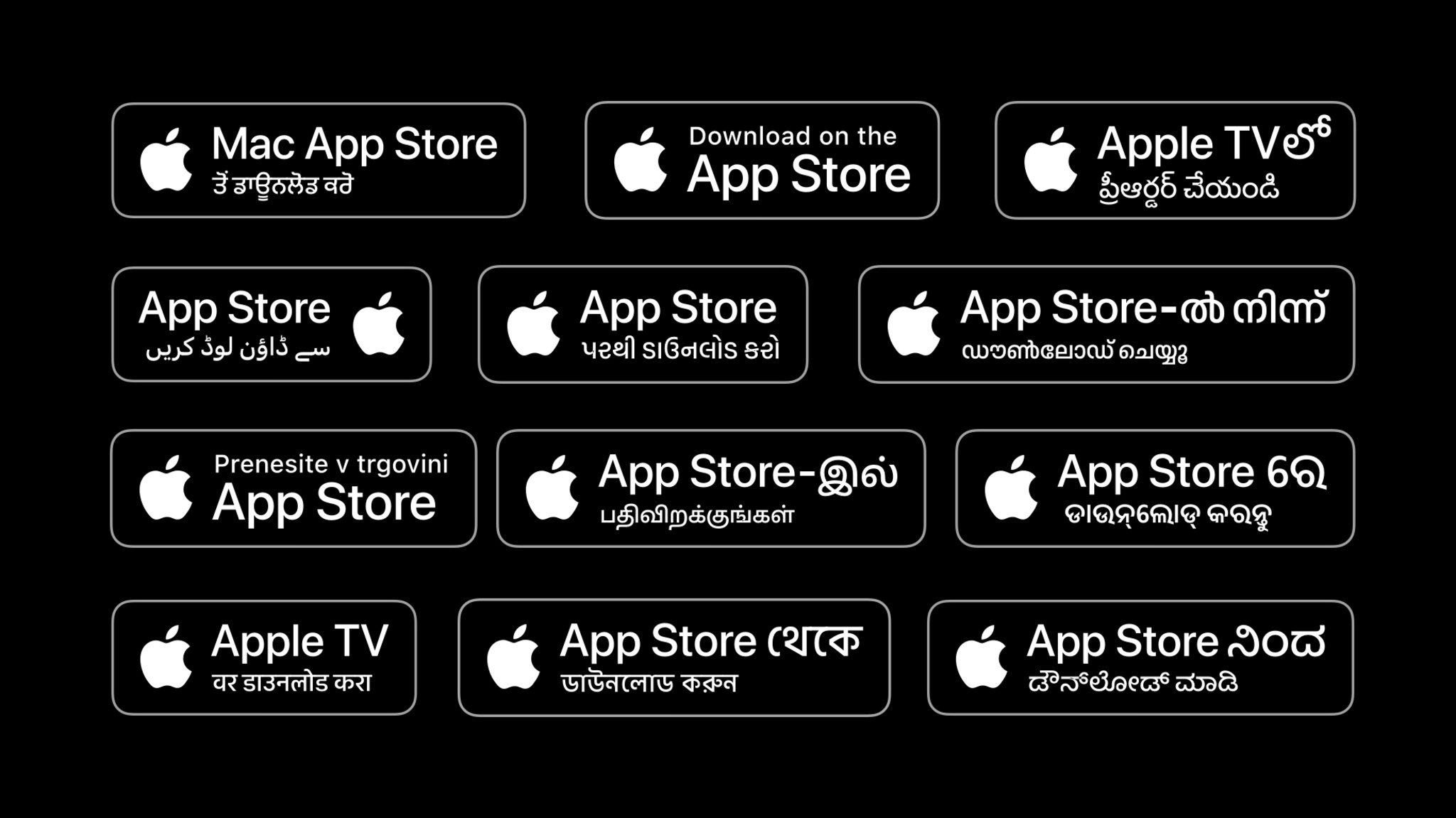
To help your apps and games reach more people worldwide — especially in India — App Store Connect now supports localized metadata for 11 new languages, bringing the total number of supported localizations to 50. The new languages include Bangla, Gujarati, Kannada, Malayalam, Marathi, Odia, Punjabi, Slovenian, Tamil, Telugu, and Urdu. You can now provide localized metadata — such as your app name, description, screenshots, and more — in App Store Connect. When you localize your metadata, it helps make your app relevant to potential users across languages and cultures, and provides an opportunity to grow your business. You can add localized metadata with your next version submission for each platform you support and use new localized App Store badges in your marketing communications. Learn how to localize your app information Learn about expanding your app to new markets Download the new localized App Store badges

Apple Developer News·March 31, 2026·1 min read
Update on regulated medical device apps in the European Economic Area, United Kingdom, and United States
Mobile GamesNews

Update on regulated medical device apps in the European Economic Area, United Kingdom, and United States

To provide additional transparency to customers, the App Store will now display whether an app is a regulated medical device on its product page in the European Economic Area (EEA) , United Kingdom , or United States. Regulated medical device apps are those that function on their own or as part of a system for a range of medical purposes, including diagnosis, prevention, monitoring, and treatment of diseases and physiological conditions. These apps may require registration or authorization from regulatory bodies, such as the U.S. Food and Drug Administration (FDA). If you distribute in the EEA, UK, or U.S. and your app meets either of the following criteria, you’ll need to provide a regulated medical device status in App Store Connect, along with relevant regulatory information, such as contact details and safety information: Its primary or secondary category is Health & Fitness or Medical It’s marked as containing frequent references to Medical or Treatment Information in the Age Rating questionnaire in App Store Connect Starting today, this status is required for new apps that meet either of the criteria above in order to distribute in these regions. Existing apps distributed in these regions that meet either of the criteria above must provide a status by early 2027. However, if you haven’t declared your app’s status by early 2027, you’ll no longer be able to submit app updates. If your app is not a regulated medical device, you can select No. Learn about providing a regulated medical device status

Apple Developer News·
New In-App Purchase and subscription data now available in Analytics
Mobile GamesTutorial

New In-App Purchase and subscription data now available in Analytics

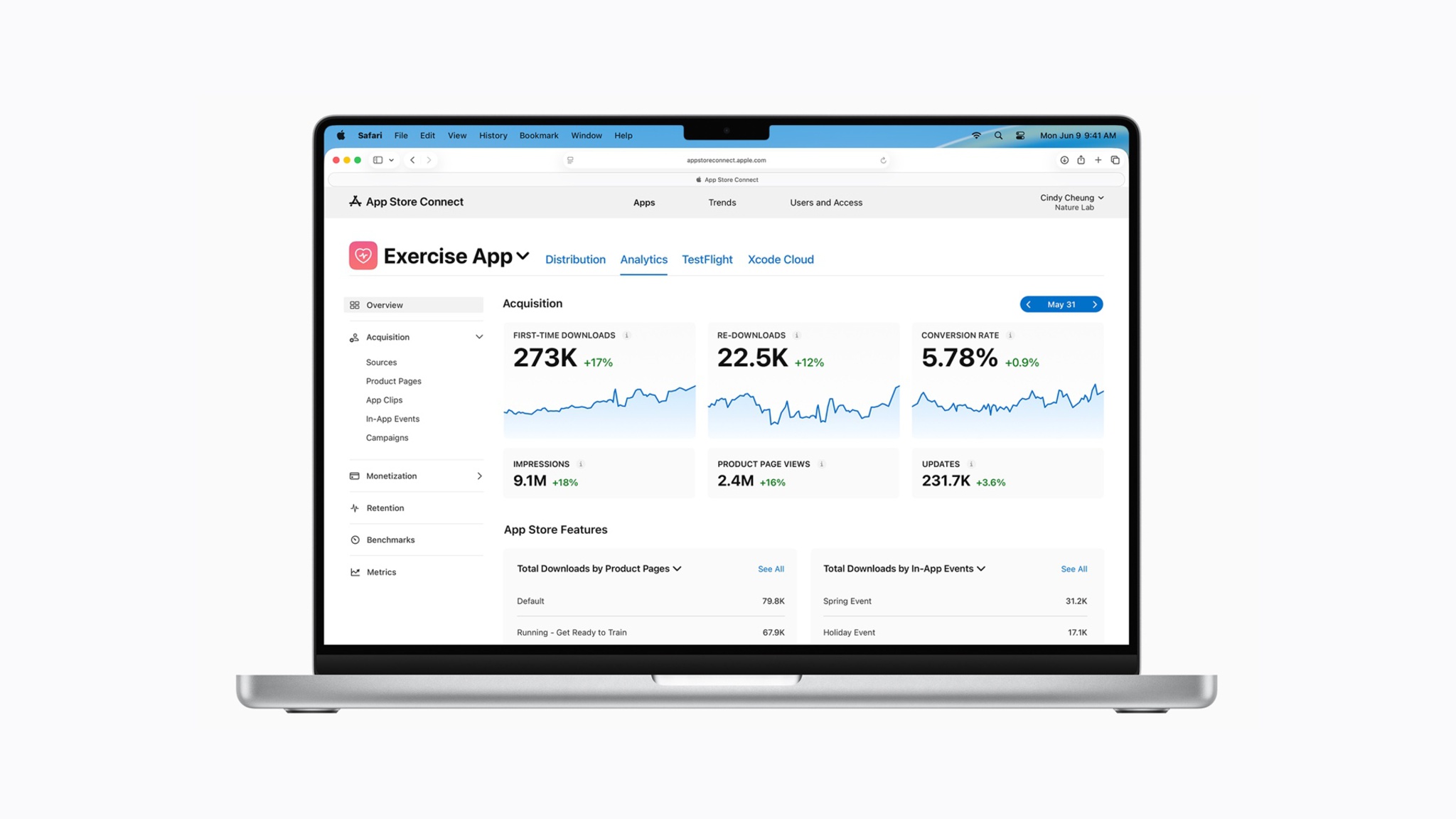
Analytics in App Store Connect receives its biggest update since its launch, including a refreshed user experience that makes it easier to measure the performance of your apps and games. Updates include: More than 100 new metrics. Now you can access monetization and subscription data in Analytics to better understand the performance of your In-App Purchases and offers. New cohort capabilities. Analyze user behavior based on common attributes — such as download date, download source, offer start date, and more — to measure how a particular group of users performs over time. For example, if you’ve expanded your app to a new region, you can monitor how long it takes users in that region to make a purchase compared to other more established regions. Cohort data is aggregated to ensure user privacy. New peer group benchmarks. Discover how you stack up to peers with two new monetization benchmarks: download-to-paid conversion and proceeds per download. Benchmarks incorporate differential privacy techniques to protect individual developer performance while also providing meaningful and actionable insights. Two new subscription reports. Export these via the Analytics Reports API to perform offline analysis and integrate Analytics into your own data systems. Additional filters. Apply up to seven filters to your selected metrics at once allowing you to drill down further and uncover additional insights. App Store Analytics Guide. This new guide in App Store Connect Help enables you to develop a data-driven strategy and understand App Store tools and features you can use to grow your business. Learn about measuring performance with Analytics Read the new Analytics guide

Apple Developer News
WWDC26: June 8-12, 2026
Mobile GamesNews

WWDC26: June 8-12, 2026

Join the worldwide developer community online for a week of technology, creativity, and community. Be there for the reveal of the latest Apple tools, frameworks, and features. Learn to elevate your apps and games through video sessions hosted by Apple engineers and designers. Engage with Apple experts in labs and connect with the worldwide developer community. All online and free. Learn more about WWDC26

Apple Developer News·March 23, 2026·1 min read
Apple Developer is now on bilibili and LinkedIn
ProgrammingNews

Apple Developer is now on bilibili and LinkedIn

Check out Apple Developer on bilibili and LinkedIn to learn about the latest news, announcements, videos, and events — including the Worldwide Developers Conference and Meet with Apple activities — for the developer community. Follow on bilibili Follow on LinkedIn

Apple Developer News·March 17, 2026·1 min read
Adjustments to the China storefront of the App Store on iOS and iPadOS
Mobile GamesNews

Adjustments to the China storefront of the App Store on iOS and iPadOS

Apple is making changes to the App Store in China following discussions with the Chinese regulator. As of March 15, 2026, changes will be made to the commission rates that apply to the China mainland storefront of the App Store on iOS and iPadOS. The commission rate for standard Apple In-App Purchase and paid app transactions will be 25%. Currently, the rate is 30%. The commission rate for qualifying Apple In-App Purchase transactions under the App Store Small Business Program and Mini Apps Partner Program, and for auto-renewals of Apple In-App Purchase subscriptions after the first year, will be 12%. Currently, the rate is 15%. Signing the updated terms by March 15 is not required to receive the benefit of these commission rate changes starting that date. We strive for iOS and iPadOS to be the best app ecosystem and a great business opportunity for developers in China. We are committed to terms that remain fair and transparent to all developers, and to always offering competitive App Store rates to developers distributing apps in China that are no higher than overall rates in other markets. The Apple Developer Program License Agreement has been revised to support updated policies. You can sign in to your account to accept the updated terms. Translations of the updated agreement will be available on Apple Developer website within one month.

Apple Developer News·March 13, 2026·1 min read
Hello Developer: March 2026
ProgrammingNews

Hello Developer: March 2026

In this edition: Join Apple at GDC. Get tips on privacy and security in a new developer activity. Dive deep on coding intelligence in Xcode 26. Learn how the Speechify team is going all in on AI. Catch up on the latest news and updates. Read now

Apple Developer News·March 3, 2026·1 min read
Age requirements for apps distributed in Brazil, Australia, Singapore, Utah, and Louisiana
Mobile GamesNews

Age requirements for apps distributed in Brazil, Australia, Singapore, Utah, and Louisiana

Today we’re providing an update on the tools available for developers to meet their age assurance obligations under upcoming U.S. and regional laws, including in Brazil, Australia, Singapore, Utah, and Louisiana. Updates to the Declared Age Range API are now available in beta for testing. Brazil Developers who are distributing apps in Brazil can use the updated Declared Age Range API to obtain a user’s age category. Age categories for users in Brazil will be shared when the user or a parent or guardian (where relevant) agrees to share the age category with you. The API will also return a signal from the user’s device about the method of age assurance. Apps rated 18+ in Australia, Singapore, and Brazil Starting February 24, 2026, Apple will block users in Australia, Brazil, and Singapore from downloading apps rated 18+ unless they have been confirmed to be adults through reasonable methods. The App Store will perform this confirmation automatically. However, developers may have separate obligations to independently confirm that their users are adults. To assist with this, the Declared Age Range API—available on iOS, iPadOS, and macOS—provides developers with a helpful signal about a user's age. For developers distributing their apps in Brazil, if you identify your app as containing loot boxes through the age rating questionnaire, the age rating of your app on the Brazil storefront will be updated to 18+. Utah and Louisiana For users with new Apple Accounts in Utah as of May 6, 2026, and in Louisiana as of July 1, 2026, age categories will be shared with the developer’s app when requested through the Declared Age Range API. The tools we previously announced have been expanded to help developers meet compliance obligations for Louisiana and Utah, including: Declared Age Range API Significant Change API under PermissionKit New age rating property type in StoreKit App Store Server Notifications New signals are now available through the Declared Age Range API, including whether age-related regulatory requirements apply to the user and if the user is required to share their age range. The API will also let you know if you need to get a parent or guardian's permission for significant app updates for a child. Developers can use the Declared Age Range API to present significant update notifications to adults in these states through the Significant Update Action, now in beta. When releasing a significant update, developers must follow the Human Interface Guidelines and provide users with a meaningful description of the update. Age assurance frameworks Q&A Design safe and age‑appropriate experiences for your apps and games

Updated App Review Guidelines now available
Mobile GamesNews

Updated App Review Guidelines now available

The App Review Guidelines have been revised to clarify that apps with random or anonymous chat are subject to the 1.2 User-Generated Content guideline . Translations of the guidelines will be available on Apple Developer website within one month.

Apple Developer News·February 6, 2026·1 min read
← Previous12345…11Next →
🔥

Developer Pulse

What developers are discussing today

  • GPT-5.5 API↗9.4K
  • Next.js 16↗6.2K
  • Claude Code↗5.8K
  • Kubernetes→3.4K
  • Rust↗2.7K
Apple Developer News·April 3, 2026·7 min read
Apple Developer News·April 3, 2026·5 min read
March 26, 2026
·1 min read
·
March 25, 2026
·1 min read
Apple Developer News·February 24, 2026·2 min read
Zero-Day
↘2K
💬

Top Discussion

HN

Hacker News

“GPT-5.5's API pricing is reshaping how startups build AI products”

14.1K932 comments
View discussion→

Filters

Time
Categories
Sources
Content Type