Virexa
HomeAIProgrammingCloudSecurityOpen SourceGamesMobile GamesDeveloper Hub
Sign InSign Up
Virexa
Sign InSign Up
AIProgrammingCloudSecurityOpen SourceGamesMobile GamesDeveloper Hub
Virexa

Modern AI news aggregation and newsletter platform covering technology, business, AI, games and world news.

Categories

  • AI
  • Programming
  • Cloud
  • Security
  • Open Source
  • Developer Hub

Company

  • About
  • Contact
  • Advertise

Resources

  • RSS Feed
  • API
  • Privacy Policy
  • Terms of Service

© 2026 Virexa. All rights reserved.

Virexa
HomeAIProgrammingCloudSecurityOpen SourceGamesMobile GamesDeveloper Hub
Sign InSign Up
Virexa
Sign InSign Up
AIProgrammingCloudSecurityOpen SourceGamesMobile GamesDeveloper Hub
Virexa
HomeAIProgrammingCloudSecurityOpen SourceGamesMobile GamesDeveloper Hub
Sign InSign Up
Virexa
Sign InSign Up
AIProgrammingCloudSecurityOpen SourceGamesMobile GamesDeveloper Hub
Home›Science

Science

Research breakthroughs across physics, biology, climate, and the natural world.

198 articles found

Koalas nearly went extinct before humans arrived, DNA study reveals

Koalas nearly went extinct before humans arrived, DNA study reveals

A major DNA study has rewritten the koala's evolutionary story, revealing that the species suffered a dramatic population collapse about 100,000 years ago, long before humans arrived in Australia. By calculating the koala's mutation rate for the first time and analyzing hundreds of genomes, researchers discovered that every living koala traces back to a small group that survived extreme climate shifts and later repopulated eastern Australia.

ScienceDaily•July 17, 2026
Scientists tested 39 sweeteners and found unexpected gut effects

Scientists tested 39 sweeteners and found unexpected gut effects

A large laboratory study found that many commonly used sweeteners can directly change the growth of gut bacteria. Researchers identified more than 100 cases in which sweeteners behaved differently when combined with medications, caffeine, or flavorings. The combination of isosteviol and the antidepressant duloxetine was especially disruptive, reducing beneficial bacteria and overall microbial diversity.

ScienceDaily•July 17, 2026
Scientists built a camera that can track invisible particles in 3D

Scientists built a camera that can track invisible particles in 3D

A new particle detector called PLATON could replace millions of tiny detector components with a single block of light-producing material. Using a light-field camera, highly sensitive photon sensors, and AI, it reconstructs particle paths in fast, detailed 3D. Simulations suggest it could match or surpass today’s best detectors while being far easier to scale. The technology may also lead to sharper PET medical scans.

ScienceDaily•July 17, 2026
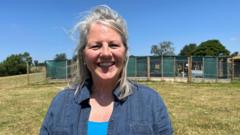
Curlew chicks released to boost species numbers

Curlew chicks released to boost species numbers

Curlew Country is hoping to improve the birds' chances by making sure they get the best start.

BBC•July 17, 2026
New “living plastic” self-destructs in just 6 days without leaving microplastics

New “living plastic” self-destructs in just 6 days without leaving microplastics

Researchers have created self-destructing living plastic that uses engineered bacteria to completely break itself down when activated. The material degrades in just six days without creating microplastics, offering a potential new solution for single-use plastic waste.

ScienceDaily•July 17, 2026
This sugar-coated therapy boosted survival against deadly brain cancer by 50% in mice

This sugar-coated therapy boosted survival against deadly brain cancer by 50% in mice

A new experimental treatment may have found a way to outsmart glioblastoma’s toughest defense: the blood-brain barrier. Researchers used sugar-coated nanoparticles to ferry genetic instructions that restore a key tumor-suppressing protein directly into brain cancer cells. In mouse studies, the therapy increased median survival by 50% while shrinking tumors without noticeable damage to other organs.

ScienceDaily•July 17, 2026
Pete Hegseth’s Plan for ‘High T’ Troops Is a Junk-Science Fever Dream

Pete Hegseth’s Plan for ‘High T’ Troops Is a Junk-Science Fever Dream

The defense secretary’s idea of administering testosterone therapy to members of the US Armed Forces reveals little understanding of the complexity of hormones.

Wired•July 17, 2026
Leaky pipes may explain years-long bay pollution

Leaky pipes may explain years-long bay pollution

The Environment Agency has rated Cullercoat's water quality as "poor" since 2018.

BBC•July 16, 2026
12345678910111213

Related Categories

Explore more of what's active right now

  • 💻Technology744 articles
  • 🕹️Mobile Games714 articles
  • 🌍World416 articles
  • 📱Mobile365 articles
  • 🤖AI277 articles
  • 💼Business
14
15
16
17
18
19
20
21
22
23
24
25
206 articles

Recently Added

'It's like having an amusement park and not opening it' - algae closures take toll'It's like having an amusement park and not opening it' - algae closures take tollBBC•July 26, 2026How to see July's full Buck Moon as it rises in the night skyHow to see July's full Buck Moon as it rises in the night skyBBC•July 26, 2026A single dose reversed autism-like symptoms in adult mice within hoursA single dose reversed autism-like symptoms in adult mice within hoursScienceDaily•July 25, 2026Superagers keep youthful memories but their DNA does not explain whySuperagers keep youthful memories but their DNA does not explain whyScienceDaily•July 25, 2026Scientists put the “recycling is a distraction” claim to the testScientists put the “recycling is a distraction” claim to the testScienceDaily•July 25, 2026