TechnologyNews
Opus 5 is currently #1 on Artificial Analysis Intelligence Leaderboard
222 points 131 comments on Hacker News · artificialanalysis.ai
Hacker News1 min read
Explore
Enter a keyword in the search bar above to find articles, or use the filters to browse.
3,304 results • Page 12 of 276
222 points 131 comments on Hacker News · artificialanalysis.ai
Brands diversify where they make products but sell almost everything into one market. Learn why single-country sales dependence is the bigger, riskier blind spot.
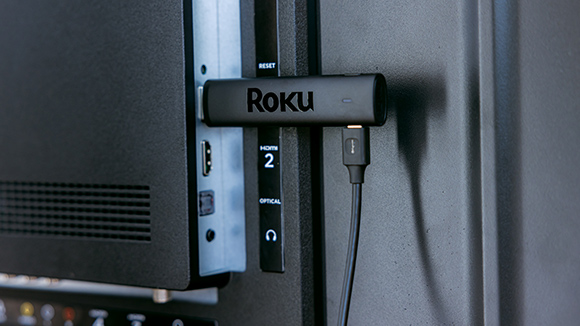
Roku blames RAM shortage after CEO called it "great" for business in May.
Chuck Russell, who directed the hit Jim Carrey comedy "The Mask," as well as Dwayne “The Rock” Johnson in the action fantasy "The Scorpion King," has died.
Similar power, half the bill.
Multiple Trump administration social media accounts this week boasted immigration authorities are “deportationmaxxing”—an apparent adaptation of internet lingo like “looksmaxxing.”
Enterprises deployed AI agents ahead of the controls needed to manage them — and they did it knowingly. That is the central finding across the five parallel surveys VentureBeat Research fielded in June, spanning every layer of the agentic stack. Now those enterprises are retrofitting to catch up with their own standards, and they are budgeting for it: In each of the five control layers we measured, 57 to 68% of enterprises plan to switch vendors or add new ones within 12 months, and roughly a third, depending on the layer, plan to move within the quarter. VentureBeat Research measured the five controls an enterprise has to build before it can trust an agent: identity, evaluation, cost telemetry, the context layer, and orchestration. Identity governs which agent is allowed to do what, under whose credentials. Evaluation determines whether the agent's work is any good. Cost telemetry tracks what each agent costs to run. The context layer supplies the business data and definitions agents draw on when they answer. And the orchestration control plane coordinates multi-step agent work. Each of our five reports measures one of those controls. Most deployed "agents" are chatbots wearing the label. Seventy-one percent of enterprises said a quarter or fewer of their deployed "agents" can complete multi-step work on their own; only 10% said true agents are the majority of what they run. These respondents are positioned to know: 81% recommend or decide AI purchases at their companies. A single-prompt chatbot with a human reading every answer needs none of the controls the other four reports measure. A true multi-step agent needs all of them — and most enterprises can't say which one they've deployed. (Full findings: Agentic Orchestration report. ) Autonomy is outrunning trust in the evaluations that gate it. Two-thirds of enterprises either already allow an agent to push a code or system change to production on automated evaluation results alone, with no human review, or are actively engineering toward that within 12 months. Only 5% fully trust the evaluations that would make that call — and half of enterprises shipped an agent that passed internal evaluations and then caused a customer-facing failure in the past year. Before removing human review from any workflow, test evaluations against production outcomes rather than internal benchmarks. (Full findings: Agent Reliability & Evals report .) Companies that let agents share credentials get hit more often. Sixty-nine percent of companies let at least some of their agents share credentials — multiple agents operating under one API key or service account. Organizations that allow credential sharing anywhere experienced a security incident or near-miss at a 63.5% rate (47 of 74), against 40.9% (nine of 22) at companies where every agent has its own scoped identity. The fix is scoped identity for every agent, starting with the ones that touch production systems. (Full findings: Agentic Security & Identity report .) The most expensive hardware in the building runs at half capacity or less. More than eight in 10 enterprises that run their own GPUs reported utilization of 50% or less, and only 44% rigorously track what their AI compute actually costs and returns. The number worth chasing first isn't more GPUs — it's the utilization and per-workload cost of the ones already running. (Full findings: AI Infrastructure & Compute report .) Agents answer confidently from data nobody governs. Fifty-seven percent of enterprises traced a confident, wrong agent answer in the past six months to their own missing or inconsistent business context — wrong metrics, stale definitions, absent documents — and most saw it happen more than once. Governing the definitions agents answer from — metrics and entities first — has to come before scaling the agents that depend on them. (Full findings: Context Layers / RAG report .) No layer has an entrenched incumbent: The defaults today are the built-in tools that ship with the big AI platforms enterprises already use. Switching intent runs highest in orchestration itself, where 68% plan to adopt, add, or replace platforms within 12 months and 34% within the quarter. Our surveys did not ask which direction that money moves — toward the platforms' built-in tools or toward the specialists challenging them — and that open question is the next four quarters of this market. About this research VentureBeat Research fielded five parallel surveys in June 2026 under its VB Pulse program: Agentic Orchestration (101 respondents), Agent Reliability & Evals (157), Agentic Security & Identity (107), AI Infrastructure & Compute (107), and Context Layers / RAG (101) — 573 qualified respondents in total, all at organizations with 100 or more employees. Samples are self-selected, and some findings should be read directionally; each report carries its full methodology note. What the pattern supports more strongly than any single percentage is the direction: every survey, independently, points the same way. VentureBeat produces both this research and VB Transform , the conference where these reports debuted.
Legal experts say the law Trump used is harder to challenge—but his tariffs could be sweeping enough to pose concerns.
Meta's smart glasses have been a PR headache for the company. Public backlash has been swift, and fierce; people are concerned about the erosion of privacy and expansion of surveillance. Some especially bad actors are using the glasses to film themselves "pranking" random strangers. Women have become unsuspecting social media content for men filming themselves […]
The U.S. Army broke ground on yet another new facility to produce the in-demand 155mm ordnance, but another plant opened in 2024 has failed to deliver as promised
The event has been moved to the much smaller ballroom at the Waldorf Astoria hotel.
Nevada lawmakers also campaigned hard for the chance to host the first Democratic primary.
Hacker News
“GPT-5.5's API pricing is reshaping how startups build AI products”