MobileNews
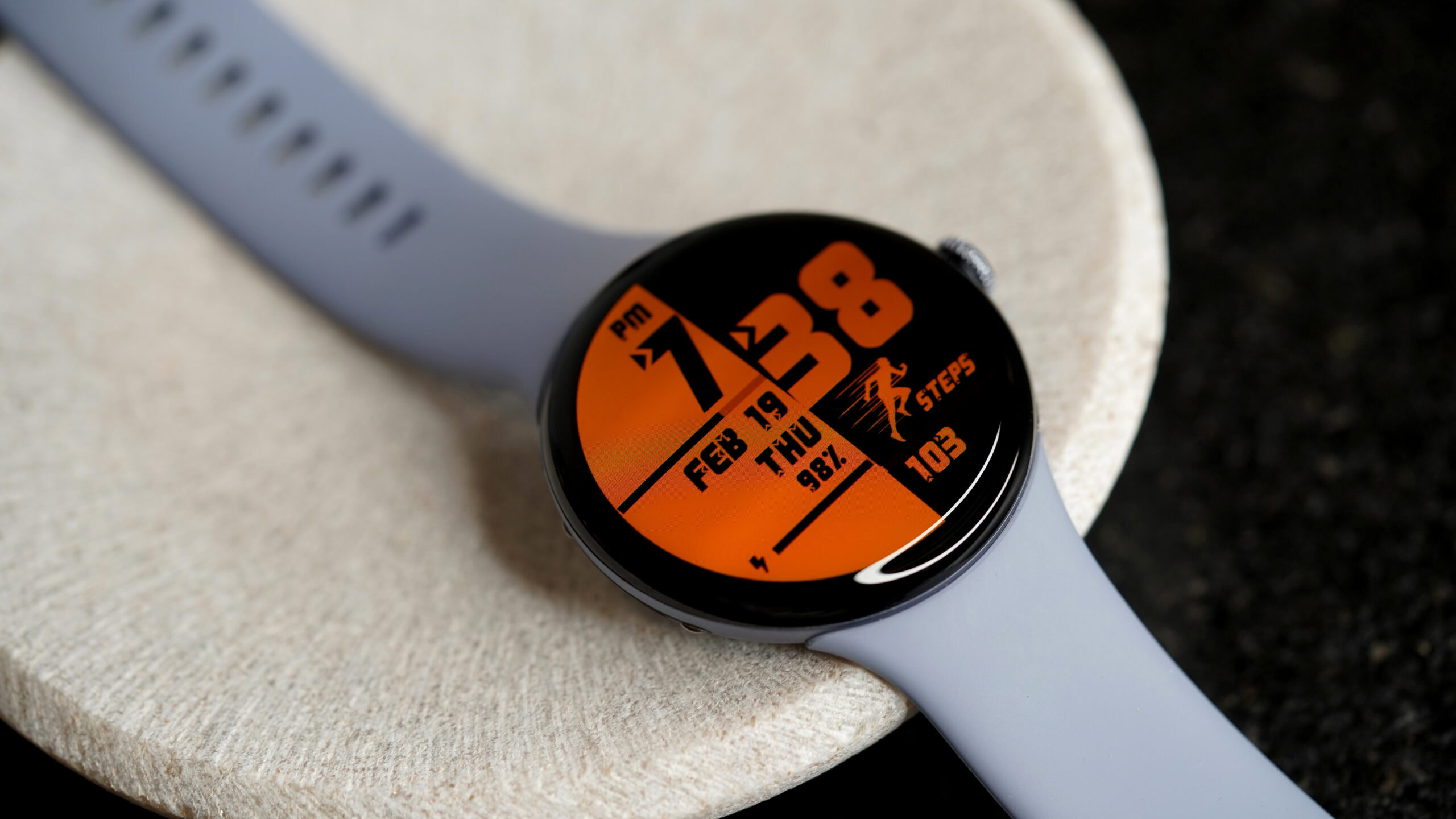
Google just fixed an annoying tap-to-pay Pixel Watch bug
Express Pay wasn't working for some users, but Google says it should be fixed today.
Android Authority1 min read
Explore
Enter a keyword in the search bar above to find articles, or use the filters to browse.
3,592 results • Page 50 of 300
Express Pay wasn't working for some users, but Google says it should be fixed today.
Meta has made significant investments in natural gas over the past year. Now it's dropping out of an industry renewable energy group.
Trump had 34% and 39% approval ratings in the latest two polls released Thursday.
Mexican journalist Alejandro Leyva Aguilar was shot dead while eating at a street food stall in Oaxaca.
Marvel has revealed Remy LeBeau's new codename, and it is a sign of dangerous changes in Gail Simone's Uncanny X-Men
On "Forbes Newsroom," Emerson College Polling Senior Director Matt Taglia discussed a new poll on the standings of possible 2028 presidential contenders.
We want to hear from you. Has T-Mobile's plan turmoil pushed you towards an unplanned carrier switch?
Yemen has proven oil reserves estimated at three billion barrels, but the security environment hinders its export.
MMA legend Cris Cyborg reflects on the changes in women's MMA as she prepares for her retirement fight against Ketlen Vieira.
I’ve been building Echo ( https://echo.tracerml.ai/ ), an experiment in making one AI system out of a pool of open-weight models rather than choosing a single model and using it for every task. It started with a simple experiment. I took a group of models, including GLM-5.2, Kimi K2.7 and others, and ran them on the same evaluations. Then I measured what would happen if, for each problem, you somehow knew in advance which models would be useful and how their outputs should be combined. That hypothetical system performed substantially better than any individual model in the pool. Of course, it is not something you can actually deploy because it relies on knowing which decisions were good after seeing the result. Echo is my attempt to recover some of that advantage without having that information in advance. For each request, Echo decides how much computation to allocate, which models should participate, and how their work should be combined. Some prompts may only need a relatively small amount of inference, while others benefit from multiple models working on different parts of the problem. One thing that surprised me while building it was how complementary the models are. A model that is clearly weaker overall can still be extremely useful on particular problems or as part of a combination. On my first evaluation mix, Echo consistently performed better than the best individual model in its pool. It also reached roughly the same aggregate result as Fable, which I used as one of the stronger comparison systems, at around one third of the inference cost. There are still some cases where Echo makes the wrong allocation or combination decision. I’m currently spending a lot of time understanding those failures, as well as testing whether the same approach holds up on coding and agentic tasks where measuring the quality of each decision becomes much harder. I built a chat interface (echo.tracerml.ai) and an OpenAI-compatible API ( https://echo.tracerml.ai/docs/api ) so the system can be tested outside the evaluation setup. Here is a short/high level video on how it works: https://www.youtube.com/watch?v=lJFJSvOdXhg I wrote up the evaluation methodology, individual model results, costs and current limitations here: https://echo.tracerml.ai/eval I would love for you to try it! Especially if you hit any weird failure cases or places where the allocation looks unintuitive.
Watch an ad, play a game for free.
The FDA hasn't said where the cases are or how they're linked.
Hacker News
“GPT-5.5's API pricing is reshaping how startups build AI products”