StartupNews
The Truth About Startup Life Nobody Tells You with Joseph Kim
A brutally honest look at what startup life really costs, and why chasing success without purpose leaves founders burned out, broken, or both.
Deconstructor of Fun6 min read
Explore
Enter a keyword in the search bar above to find articles, or use the filters to browse.
3,304 results • Page 218 of 276
A brutally honest look at what startup life really costs, and why chasing success without purpose leaves founders burned out, broken, or both.
Posted by Robbie McLachlan – Developer Marketing In our latest #WeArePlay film, which celebrates the people behind apps and games on Google Play, we meet Bill and Silver - the duo behind Amanotes . Their game company has reached over 3 billion downloads with their mission ‘everyone can music’. Their titles, including the global hit Magic Tiles 3 , turn playing musical instruments into a fun, easy, and interactive experience, with no musical background needed. Discover how Amanotes blends creativity and technology to bring joy and connection to billions of players around the world. What inspired you to create Amanotes? Bill: It all began with a question I’d pursued for over 20 years - how can technology make music even more beautiful? I grew up in a musical family, surrounded by instruments, but I also loved building things with tech. Amanotes became the space where I could bring those two passions together. Silver: Honestly, I wasn’t planning to start a company. I had just finished studying entrepreneurship and was looking to join a startup, not launch one. I dropped a message in an online group saying I wanted to find a team to work with, and Bill reached out. We met for coffee, talked for about an hour, and by the end, we just said, why not give it a shot? That one meeting turned into ten years of building Amanotes. Do you remember the first time you realized your game was more than just a game and that it could change someone’s life? Silver: There’s one moment I’ll never forget. A woman in the U.S. left a review saying she used to be a pianist, but after an accident, she lost use of some of her fingers and couldn’t play anymore. Then she found Magic Tiles. She said the game gave her that feeling of playing again—even without full movement. That’s when it hit me. We weren’t just building a game. We were helping people reconnect with something they thought they’d lost. How has Google Play helped your journey? Silver: Google Play has been a huge part of our story. It was actually the first platform we ever published on. The audience was global from day one, which gave us the reach we needed to grow fast. We made great use of tools such as Firebase for A/B testing. We also relied on the Play Console for analytics and set custom pricing by country. Without Google Play, Amanotes wouldn’t be where it is today. What’s next for Amanotes? Silver: Music will always be the soul of what we do, but now we’re building games with more depth. We want to go beyond just tapping to songs. We're adding stories, challenges, and richer gameplay on top of the music. We’ve got a whole lineup of new games in the works. Each one is a chance to push the boundaries of what music games can be. Discover other inspiring app and game founders featured in #WeArePlay.
Posted by Laura Nechita – Product Manager, Google Play and Rejane França – Group Product Manager, Google Play Starting today, Google Play is revamping the way developers can manage one time products, providing greater flexibility and new ways to sell. Play has continually enhanced the ways developers can reach buyers by helping you to diversify the way you can sell products. Starting in 2022, we created more flexibility for subscriptions and a new Console interface. And now, we are bringing the same flexibility to one-time products, aligning the taxonomy for our one-time products. Previously known as in-app products, one-time product purchases are a vital way for developers to monetize on Google Play. As this business model continues to evolve, we've heard from many of you that you need more flexibility and less complexity in how you offer these digital products. To address these needs, we're launching new capabilities and a new way of thinking about your products that can help you grow your business. At its core, we've separated what the product is from how you sell it . For each one-time product, you can now configure multiple purchase options and offers . This allows you to sell the same product in multiple ways, reducing operational costs by removing the need to create and manage an ever-increasing number of catalog items . You might have already noticed some changes as we introduce this new model, which provides a more structured way to define and manage your one-time product offerings. Introducing the new model We're introducing a new three-level hierarchy for defining and managing one-time products. This new structure builds upon concepts already familiar from our subscription model and aligns the taxonomy for all of your in-app product offerings on Play. One-time product: This object defines what the user is buying. Think of it as the core item in your catalog, such as a "Diamond sword", “Coins” or “No ads”. Purchase option: This defines how the entitlement is granted to the user, its price, and where the product will be available. A single one-time product can have multiple purchase options representing different ways to acquire it, such as buying it or renting it for a set period of time. Purchase options now have two distinct types: buy and rent . Offer: Offers further modify a purchase option and can be used to model discounts or pre-orders . A single purchase option can have multiple offers associated with it. This allows for a more organized and efficient way to manage your catalog. For instance, you can have one "Diamond sword" product and offer it with a "Buy" purchase option in the US for $10 and a "Rent" purchase option in the UK for £5. This new taxonomy will also allow Play to better understand what the catalogue means, helping developers to further amplify their impact in Play surfaces. More flexibility to reach more users The new model unlocks significant flexibility to help you reach a wider audience and cater to different user preferences. Sell in multiple ways: Once you've migrated to PBL 8, you can set up different ways of selling the same product. This reduces the complexity of managing numerous individual products for slightly different scenarios. Introducing rentals: We're introducing the ability to configure items that are sold as rentals. Users have access to the item for a set duration of time. You can define the rental period , which is the amount of time a user has the entitlement after completing the purchase, and an optional expiration period , which is the time after starting consumption before the entitlement is revoked. Pre-order capabilities: You can now set up one-time products to be bought before their release through pre-order offers . You can configure the start date, end date, and the release date for these offers, and even include a discount. Users who pre-order agree to pay on the release date unless they cancel beforehand. No default price: we will remove the concept of default price for a product. Now you can set and manage the prices in bulk or individually for each region. Regional pricing and availability: Price changes can now be applied to purchase options and offers, allowing you to set different prices in different regions. Furthermore, you can also configure the regional availability for both purchase options and offers. This functionality is available for paid apps in addition to one-time products. Offers for promotions: Leverage offers to create various promotions, such as discounts on your base purchase price or special conditions for early access through pre-orders. To use these new features you first need to upgrade to PBL 8.0. Then, you'll need to utilize the new monetization.onetimeproducts service of the Play Developer API or use the Play Developer Console. You'll also need to integrate with the queryProductDetailsAsync API to take advantage of these new capabilities. And while querySkuDetailsAsync and inappproducts service are not supported with the new model, they will continue to be supported as long as PBL 7 is supported. Important considerations With this change, we will offer a backwards compatible way to port your existing SKUs into this new model. The migration will happen differently depending on how you decide to interact with your catalogue the first time you change the metadata for one or more products. New products created through Play Console UI are normalized. And products created or managed with the existing inappproducts service won't support these new features. To access them, you'll need to convert existing ones in the Play Developer Console UI. Once converted, a product can only be managed through the new Play Developer API or Play Developer Console. Products created through the new monetization.onetimeproducts service or through the Play Developer Console are already converted. Buy purchase options marked as ‘Backwards compatible’ will be returned as response for calls through querySkuDetailsAsync API. At launch, all existing products have a backwards compatible purchase option. At the time of this post, the pre-orders capability is available through the Early Access Program (EAP) only. If you are interested, please sign-up . One-time products will be reflected in the earnings reports at launch (Base plan ID and Offer ID columns will be populated for newly configured one-time products). To minimise the potential for breaking changes, we will be updating these column names in the earnings reports later this year. We encourage you to explore the new Play Developer API and the updated Play Console interface to see how this enhanced flexibility can help you better manage your catalog and grow your business. We're excited to see how you leverage these new tools to connect with your users in innovative ways.
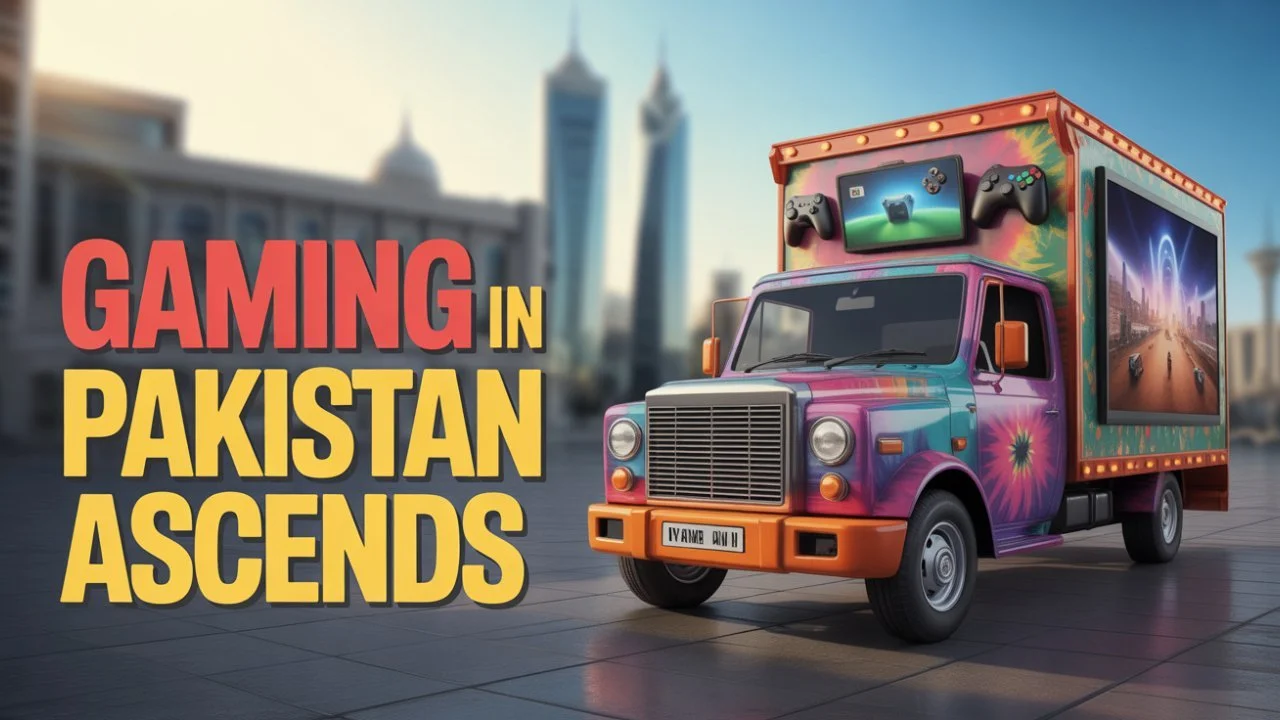
Pakistan’s game development scene is growing from the ground up. Young devs are learning fast, failing fast, and building without a safety net.
Founder breakups are more common than you think, and dead equity can quietly kill your startup. The 2-year cliff can be a company saver. We break it down why it works with real founder stories.
Posted by Daniel Trócoli – Google Play Partnerships We're thrilled to announce the return of Google Play's Indie Games Fund (IGF) in Latin America for its fourth consecutive year! This year, we're once again committing $2 million to empower another 10 indie game studios across the region. With this latest round of funding, our total investment in Latin American indie games will reach an impressive $8 million USD . Since its inception, the IGF has been a cornerstone of our commitment to fostering growth for developers of all sizes on Google Play. We've seen firsthand the transformative impact this support has had, enabling studios to expand their teams, refine their creations, and reach new audiences globally. What's in store for the Indie Games Fund in 2025? Just like in previous years, selected small game studios based in Latin America will receive a share of the $2 million fund, along with support from the Google Play team. As Vish Game Studio , a previously selected studio, shared: "The IGF was a pivotal moment for our studio, boosting us to the next level and helping us form lasting connections." We believe in fostering these kinds of pivotal moments for all our selected studios. The program is open to indie game developers who have already launched a game, whether it's on Google Play, another mobile platform, PC, or console. Each selected recipient will receive between $150,000 and $200,000 to help them elevate their game and realize their full potential. Check out all eligibility criteria and apply now ! Applications will close at 12:00 PM BRT on July 31, 2025 . To give your application the best chance, remember that priority will be given to applications received by 12:00 PM BRT on July 15, 2025 .
Posted by Raghavendra Hareesh Pottamsetty – Google Play Developer and Monetization Lead At Google Play, we're dedicated to helping people discover experiences they'll love, while empowering developers like you to bring your ideas to life and build successful businesses. This year, Google I/O was packed with exciting announcements designed to do just that. For a comprehensive overview of everything we shared, be sure to check out our blog post recapping What's new in Google Play . Today, we'll dive specifically into the latest updates designed to help you streamline your subscriptions offerings and maximize your revenue on Play. Get a quick overview of these updates in our video below, or read on for more details. #1: Subscriptions with add-ons: Streamlining subscriptions for you and your users We're excited to announce multi-product checkout for subscriptions, a new feature designed to streamline your purchase flow and offer a more unified experience for both you and your users. This enhancement allows you to sell subscription add-ons right alongside your base subscriptions , all while maintaining a single, aligned payment schedule . The result? A simplified user experience with just one price and one transaction, giving you more control over how your subscribers upgrade, downgrade, or manage their add-ons. Learn more about how to create add-ons . You can now sell base subscriptions and add-ons together in a single, streamlined transaction #2: Showcasing benefits in more places across Play: Increasing visibility and value We're also making it easier for you to retain more of your subscribers by showcasing subscription benefits in more key areas across Play. This includes the Subscriptions Center, within reminder emails, and even during the purchase and cancellation processes . This increased visibility has already proved effective, reducing voluntary churn by 2% . To take advantage of this powerful new capability, be sure to enter your subscription benefits details in Play Console. To help reduce voluntary churn, we’re showcasing your subscriptions benefits across Play #3: New grace period and account hold duration: Decreasing involuntary churn Another way we’re helping you maximize your revenue is by extending grace periods and account hold durations to tackle unintended subscription losses, which often occur when payment methods unexpectedly decline. Now, you can customize both the grace period (when users retain access while renewal is attempted) and the account hold period (when access is suspended). You can set a grace period of up to 30 days and an account hold period of up to 60 days. However, the total combined recovery period (grace period + account hold) cannot exceed 60 days. This means instead of an immediate cancellation, your users have a longer window to update their payment information. Developers who've already extended their decline recovery period—from 30 to 60 days—have seen impressive results, with an average 10% reduction in involuntary churn for renewals . Ready to see these results for yourself? Adjust your grace period and account hold durations in Play Console today. Developers who extend their decline recovery period see an average 10% reduction in involuntary churn But that’s not all. We’re constantly investing in ways to help you optimize conversion throughout the entire buyer lifecycle. This includes boosting purchase-readiness by prompting users to set up payment methods and verification right from device setup, and we've integrated these prompts into highly visible areas like the Play and Google account menus. Beyond that, we're continuously enabling payments in more markets and expanding payment options . Our AI models are even working to optimize in-app transactions by suggesting the right payment method at the right time, and we're bringing buyers back with effective cart abandonment reminders . That’s it for our top announcements from Google I/O 2025, but there’s so many more updates to discover from this year’s event. Check out What's new in Google Play to learn more, and to dive deeper into the session details, view the Google Play I/O playlist for all the announcements.
Posted by Chris Wilk – Group Product Manager, Games on Google Play To captivate players and grow your game, you need tools that enhance discovery and retention. Play Games Services (PGS) is your key to unlocking a suite of services that connect you with over 2 billion monthly active players. PGS empowers you to drive engagement through features like achievements and increase retention with promotions tailored to each gameplay progress . These tools are designed to help you deliver relevant and compelling content that keeps players coming back. We are continuously evolving gaming on Play, and this year, we're introducing more PGS-powered experiences to give you deeper player insights and greater visibility in the Play Store. To access these latest advancements and ensure continued functionality, you must migrate from PGS v1 to PGS v2 by May 2026. Let’s take a closer look at what’s new: Drive discovery and engagement by rewarding gameplay progress We’re fundamentally transforming how achievements work in the Play Store, making them a key driver for a great gaming experience. Now deeply embedded across the store, achievements are easily discoverable via search filters and game detail pages, and further drive engagement when offered with Play Points. At a minimum, you should have at least 15 achievements spread across the lifetime of the game, in the format of incremental achievements to show progress. Games that enable players to earn at least 5 achievements in the first 2 hours of gameplay are most successful in driving deeper engagement * . The most engaging titles offer 40 or more achievements with diverse types of goals including leveling up characters, game progression, hidden surprises, or even failed attempts. To help you get the most out of achievements, we’ve made it easier to create achievements with bulk configuration in Play Console . For eligible titles * , Play activates quests to reward players for completing achievements - for example with Play Points. Supercell activated quests for Hay Day , leading to an average 177% uplift in installs * . You can tailor your quests to achieve specific campaign objectives, whether it's attracting high-value players or driving spend through repeated engagement, all while making it easy to jump back into your game. Hay Day boosted new installs with achievement-based quests Increase retention with tailored promotions Promotional content is a vital tool for you to highlight new events, major content updates, and exciting offers within your game. It turns Play into a direct marketing channel to re-engage with your players. We've enhanced audience targeting capabilities so you can tailor your content to reach and convert the most relevant players. By integrating PGS, you can use the Play Grouping API to create custom segments based on gameplay context * . Using this feature, Kabam launched promotional content to custom audiences for Marvel Contest of Champions , resulting in a 4x increase in lapsed user engagement * . Marvel Contest of Champions increased retention with targeted promotional content Start implementing PGS features today PGS is designed to make the sign-in experience more seamless for players, automatically syncing their progress and identity across Android devices. With a single tap, they can pick up where they left off or start a new game from any screen. Whether you use your own sign-in solution , services from third parties, or a combination of both, we've made it easier to integrate Play Games Services with the Recall API . To ensure a consistent sign-in experience for all players, we’re phasing out PGS v1. All games currently using PGS v1 must migrate to PGS v2 by May 2026 . After this date, you will no longer be able to publish or update games that use the v1 SDK. Below you'll find the timeline to plan your migration: Migration guide Migration Overview Migrate to Play Games Services v2 (Java or Kotlin) Migrate to Play Games Services v2 (Unity) May 2025 As announced at I/O, new apps using PGS v1 can no longer be published. While existing apps can release updates with v1 and the APIs are still functional, you’ll need to migrate by May 2026, and APIs will be fully shut down in 2028. May 2026 APIs are still functional for users, but are no longer included in the SDK. New app versions compiled with the most recent SDK would fail in the build process if your code still uses the removed APIs. If your app still relies on any of these APIs, you should migrate to PGS v2 as soon as possible. Q3 2028 APIs are no longer functional and will fail when a request is sent by an app. Looking ahead, more opportunities powered by PGS Coming soon, players will be able to generate unique, AI-powered avatars within their profiles – creating fun, diverse representations of their gaming selves. With PGS integration, developers can allow players to carry over their avatar within the game. This enables players to showcase their gaming identity across the entire gameplay experience, creating an even stronger motivation to re-engage with your game. Gen AI avatar profiles create more player-centric experiences PGS is the foundational tool for maximizing your business growth on Play, enabling you to tailor your content for each player and access the latest gameplay innovations on the platform. Stay tuned for more PGS features coming this year to provide an even richer player experience. * To be eligible, the title must participate in Play Points, integrate Play Games Services v2, and have achievements configured in Play Console. * Data source from partner. Average incremental installs over a 14-day period. * Data source from partner. * The Play Grouping API provides strong measures to protect privacy for end users, including user-visible notification when the API is first used, and opt-out options through My Activity .
Hacker News
“GPT-5.5's API pricing is reshaping how startups build AI products”